440–442 Eagle Street.
c. 1801–1804The Hill–Beman–Robinson House
The Story
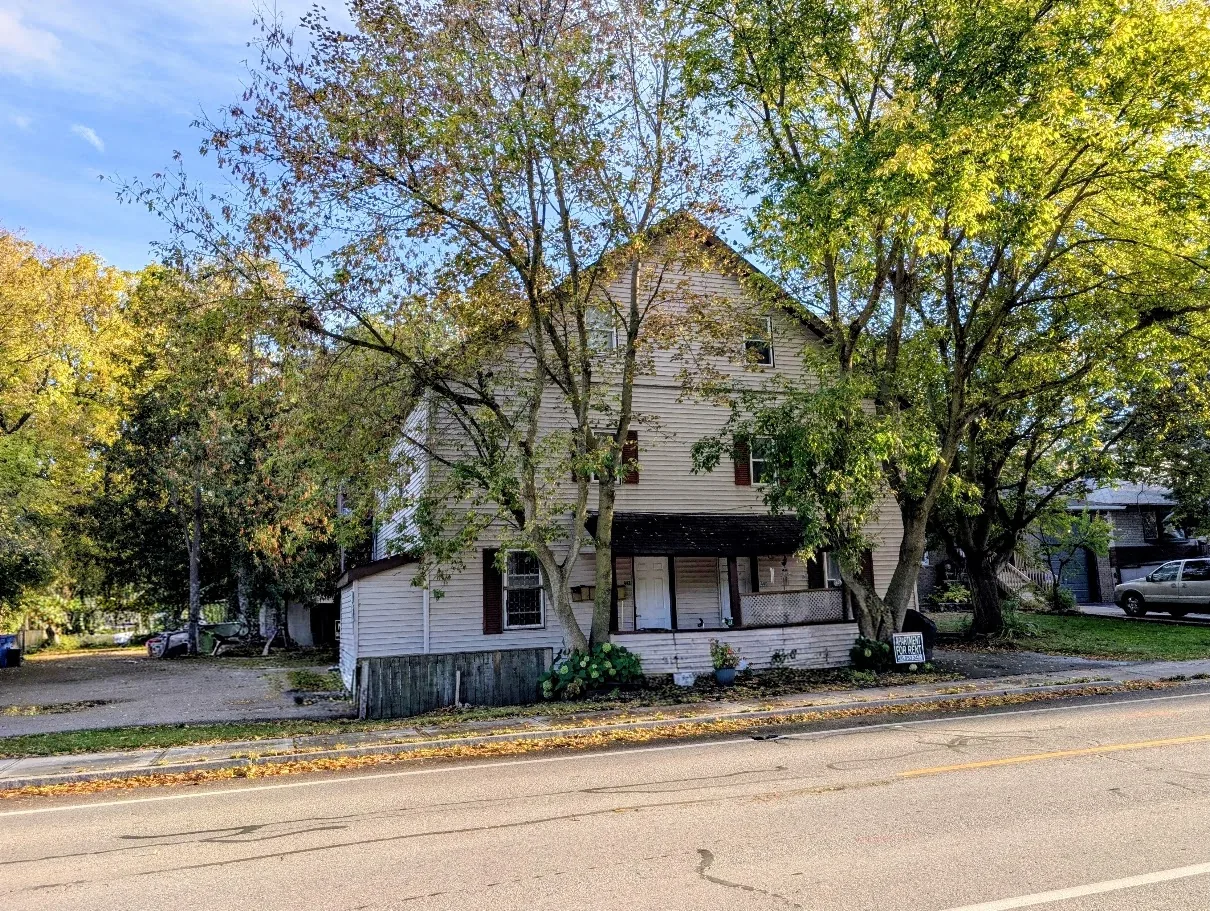
It is easy to pass this house without noticing it. Behind the siding and roadside trees stands a building whose story reaches back to the first years of Newmarket’s settlement.
Known as the Hill–Beman–Robinson House, it began beside Joseph Hill’s mill at what is now Fairy Lake. The Town’s heritage inventory identifies it as the first dwelling built within Newmarket’s present boundaries. In Stories of Newmarket, Robert Terence (Terry) Carter, longtime editor of the Newmarket Era and founder of the Newmarket Historical Society, describes it as the town’s reputed oldest building. Those descriptions give an otherwise quiet stretch of Eagle Street an extraordinary connection to the beginnings of the town.
Its first setting was quite different. The house stood on Water Street near the foot of Main Street, within the small world of the mill, store and river crossing. Hill sold to Elisha Beman in 1804. Under the Beman and Robinson household, the building was associated with trade, milling and hospitality: a home that also helped sustain the business and social life of the growing settlement.
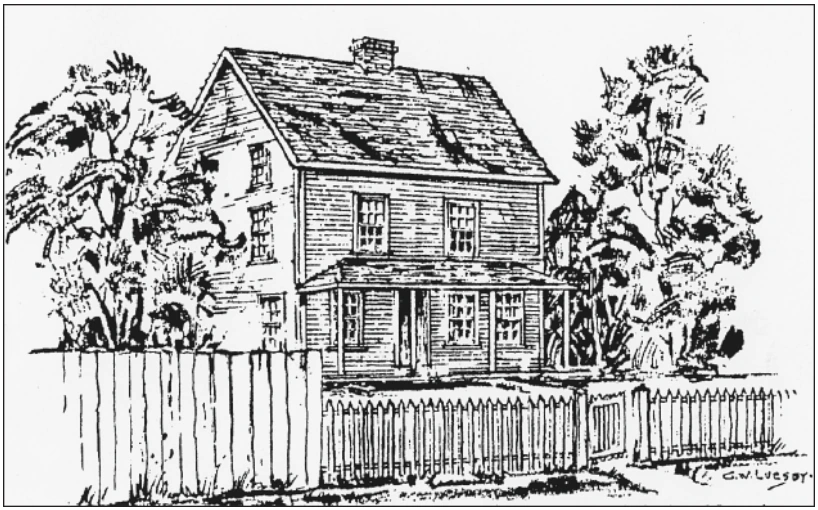
In 1855 the house was moved to Eagle Street. The Town’s walking tour records an important change in orientation: the original front became the west side. The gabled elevation facing the road today should therefore not be read as a direct, head-on counterpart to the verandah front in George Luesby’s drawing.
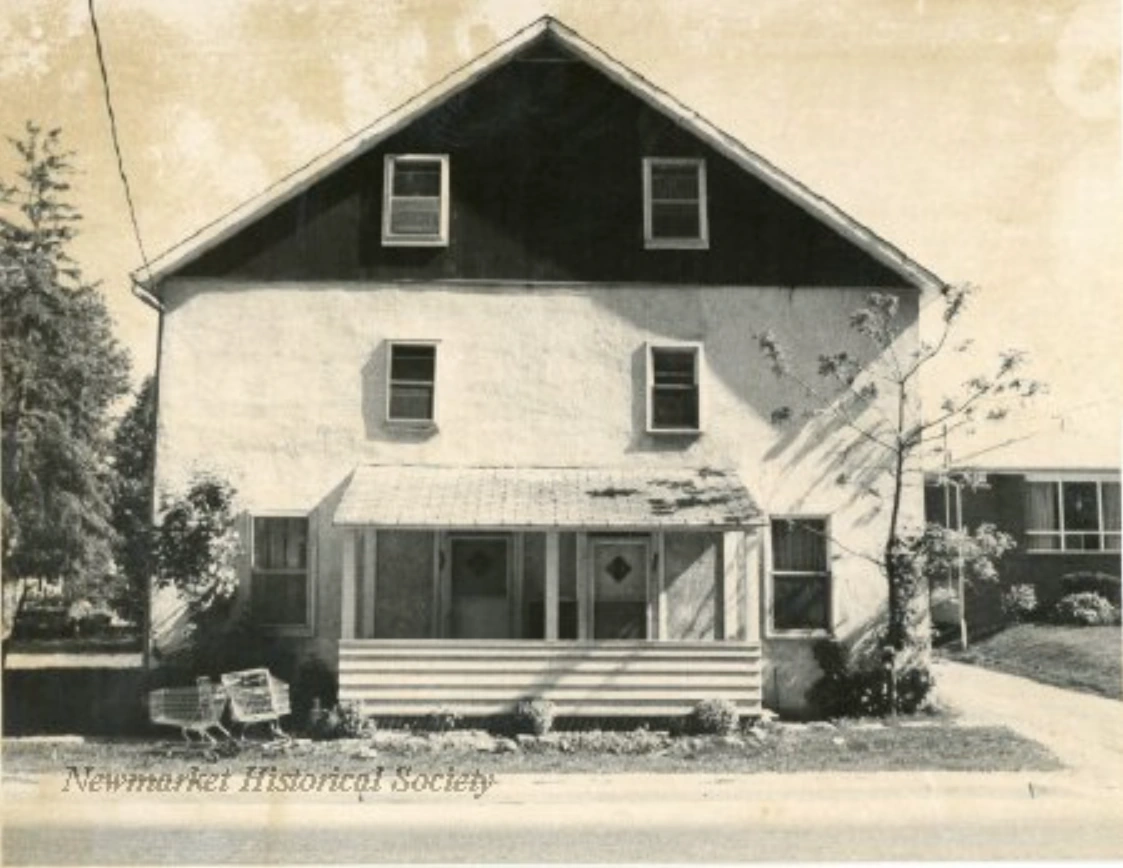
The exterior has changed repeatedly. Municipal records describe an early timber-frame dwelling with a steep gable roof, stone rubble foundation and wooden clapboard, its simple form associated with Quaker building practices. The circa-1976 photograph and our October 2026 photograph show the same broad gabled elevation through different surface treatments. They help us follow the building’s outline, but cannot tell us how much early material survives beneath the later finishes.
That is what makes this house worth looking at closely. Its place in Newmarket’s history is much larger than its appearance now suggests.
02A drawing & two photographs
Then & Now
The People
Miller · first years of settlement
Joseph Hill
Hill was a Quaker miller who arrived with Timothy Rogers’s first group of settlers. His house belonged to the small cluster of buildings around the early mill and dam at what is now Fairy Lake. Carter places its construction in 1801 or 1802; the Town’s heritage inventory gives the broader range 1801–1804. The house connects an individual household with the practical beginnings of a settlement: a place to mill grain, trade goods and make a home.
Trade, milling & hospitality
The Beman & Robinson household
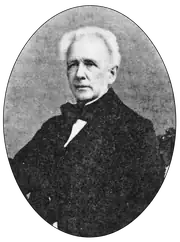
Elisha Beman acquired Hill’s house in 1804. Beman and his Robinson stepsons continued the milling and trading businesses, and Carter describes the home as a social meeting place as well as a place of commerce. After Beman’s death in 1820, his widow Esther retained a life interest in the house. Accounts of visitors and hospitality give a sense of the building’s place in a community whose domestic, commercial and public lives often shared the same rooms.
04Dates of Note
A Historical Timeline
Joseph Hill builds a frame house near his mill at what is now Fairy Lake. Carter dates construction to 1801 or 1802; municipal heritage records use 1801–1804.
Elisha Beman purchases the house. Its history becomes closely associated with the Beman and Robinson families and their milling and trading businesses.
Following Elisha Beman’s death, Esther Beman holds a life interest in the house.
The house is moved from Water Street to Eagle Street. The Town’s walking tour records that its original front becomes the west side; accounts differ on the redevelopment that prompted the move.
The supplied Historical Society photograph records the house with a contrasting gable finish and a covered entrance, decades before the present screenshot.
On February 10, Council passes By-law 2025-32 to designate 440–442 Eagle Street under the Ontario Heritage Act.
Heritage recognition
Newmarket's first house.
Recognized in 2025.
The Town's heritage inventory identifies this as the first dwelling built within Newmarket's present-day boundaries. Its place in the town's earliest story is remarkable, even beneath the alterations of later generations.
On February 10, 2025, more than two centuries after Joseph Hill built the house, Newmarket Council passed By-law 2025-32, formally designating the property under the Ontario Heritage Act.
Read the designation noticeResearch
Sources & notes
Robert Terence Carter, Stories of Newmarket
“First Settler’s House Still on Eagle Street.” The historical narrative and the account of the house’s relocation draw on the chapter “First Settler’s House Still on Eagle Street.”Town of Newmarket, heritage property inventory
E–H volume, Hill/Beman/Robinson House entry, p. 4. The saved project copy supplies construction dates, early ownership and the description of the building’s materials and form.Town of Newmarket, Heritage Walking Tour (archival brochure)
Stop 26: original siting, the 1855 relocation and the change in orientation. The archived brochure’s account of the move and date for Franklin’s visit differ from Carter’s account.Town of Newmarket, designation notice
Published February 18, 2025; records the passage of By-law 2025-32 on February 10, 2025.
Where accounts differ
Carter associates the 1855 relocation with construction of St. Andrew's Presbyterian Church; the Town's walking tour instead describes a mercantile redevelopment. Both record the move, but give different reasons for it.
There is also a discrepancy in the reported year of Sir John Franklin's visit: 1824 in the Town's walking tour and 1835 in the passage quoted by Carter. Neither date is presented as conclusive here.
Images. George Luesby’s drawing was reproduced from Robert Terence Carter’s Stories of Newmarket, where it is credited to the author’s collection. The circa-1976 photograph is credited to the Newmarket Historical Society. The present-day photograph was taken in October 2026 for The Old Houses of Newmarket.
Historical record · House 002