16874 Bayview Avenue.
The Joseph Lundy House1889–1891Queen Anne
The Story
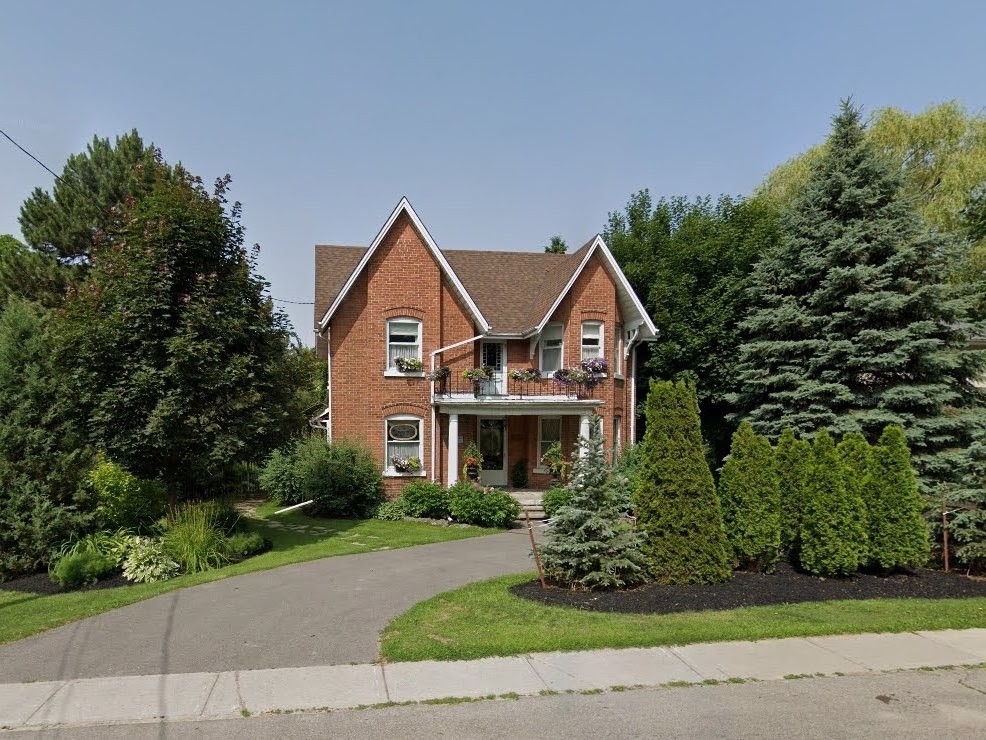
Where Prospect Street gives way to Bayview Avenue, on the outskirts of historic Newmarket, stands one of the town's more elaborate Victorian residences. Built between 1889 and 1891, the Joseph Lundy House brought the decorative flourishes of Queen Anne architecture to what was then the edge of the village.
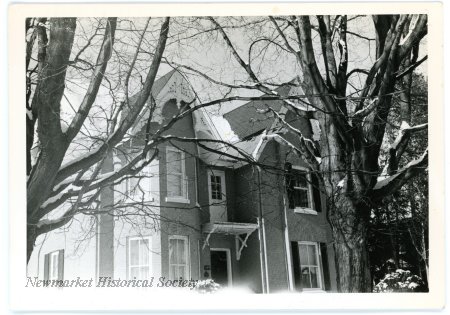
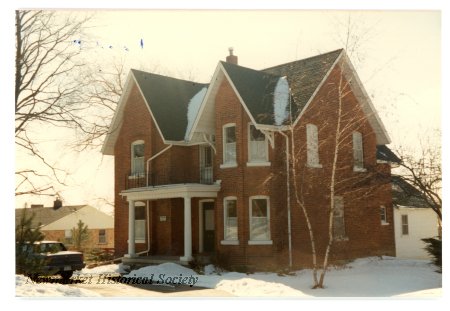
The two-storey red-brick house presents a striking arrangement of steeply pitched gables, projecting bays and decorative brickwork. Its two front gables differ in size, while a two-storey bay window, ornate wooden brackets and a recessed entrance with an upper balcony give the otherwise balanced façade a playful character. The brick may have come from the nearby Stickwood brickyard, which supplied materials for many of Newmarket's nineteenth-century buildings.
The land on which the house stands was once part of Lot 91 in the First Concession of Whitchurch Township, a property whose recorded history reaches back to a Crown grant in 1802. On January 31, 1889, Joseph C. Lundy purchased a half-acre parcel at the northeast corner of the lot from Robert W. Pearson for $250. A mortgage followed in 1890, during the period in which the house is believed to have been constructed.
In addition to his duties as town clerk, Lundy served for eighteen years as inspector of the York County Industrial Home.
Lundy retained the property until 1913, when land records show its sale to Stanley R. Jones for $3,350. By then, the house had stood for more than two decades, a substantial reminder of the late-Victorian development that had extended Newmarket's residential landscape beyond its older centre.
Recognized for both its architecture and its association with Lundy, the house was formally designated under the Ontario Heritage Act in February 2025.
02Historic photographs and a present-day view
Then & Now
The People
Joseph and Charlotte Lundy
Joseph C. Lundy and his wife, Charlotte Emily (née Crane), were the original residents of the house that bears the Lundy name today.
Born in Whitchurch Township, Joseph spent much of his working life in local government. He was first elected to township council in 1874, became deputy reeve in 1875, and served as reeve from 1878 until 1881.
In 1886, Lundy became Newmarket's town clerk, a position he held until 1912. His years in office spanned a period of considerable change as Newmarket continued to develop beyond its nineteenth-century village beginnings.
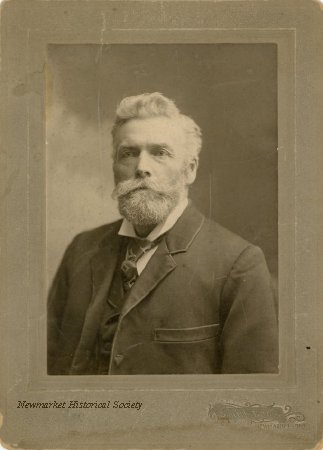
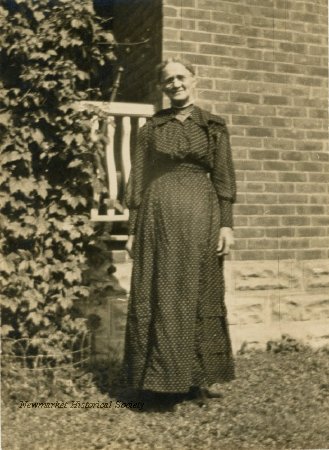
Joseph and Charlotte's Bayview Avenue residence was built during the early years of his tenure as town clerk. The couple remained associated with the property until its sale in 1913, shortly after Joseph's retirement from public service.
The house remains a tangible connection to the Lundys and to a period when the growing community was gradually extending beyond its older centre.
04Dates of Note
A Historical Timeline
The Crown grants the original Lot 91, Concession 1 of Whitchurch Township, to Stephen Barbaree.
Joseph C. Lundy is first elected to Whitchurch Township council.
Lundy serves as reeve of Whitchurch Township.
Lundy begins his long tenure as Newmarket town clerk.
On January 31, Lundy purchases a half-acre parcel from Robert W. Pearson for $250.
The Town of Newmarket dates construction of the Joseph Lundy House to these years.
A mortgage is registered against Lundy’s half-acre parcel.
Lundy retires after serving as town clerk since 1886.
The land register records Joseph Lundy and his wife selling the half-acre parcel to Stanley R. Jones.
On February 10, Newmarket designates the Joseph Lundy House under By-law 2025-13.
Fun Fact
The York County Industrial Home
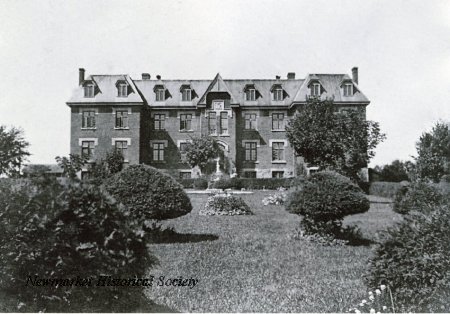
Joseph Lundy's public responsibilities extended beyond the town clerk's office. For 18 years, he also served as inspector of the York County Industrial Home, established in 1883 at Yonge and Eagle Streets to accommodate people unable to support themselves.
The Home itself was an imposing four-storey brick building in the Queen Anne style, built on a 50-acre farm that York County purchased for $4,500. Residents helped operate the farm, which eventually included a prized herd of Holstein cattle. Known locally simply as the poorhouse, the institution remained in use until 1959. The original building was demolished in 1978.
Research
Sources & notes
Town of Newmarket, By-law 2025-13, Schedule A, Statement of Significance (2025)
Official heritage designation providing the 1889–1891 construction range, architectural description, and Joseph Lundy’s association with the property.Whitchurch Township, Lot 91, Concession 1, historical land registry abstracts (OnLand)
Entries record Lundy’s purchase of a half-acre parcel in 1889, a subsequent mortgage, and an apparent sale to Stanley R. Jones in 1913. The larger historical lot contains many other unrelated transactions.Newmarket Era, “Tenders Wanted” notice (1903)
Calls for supplies to the York County Industrial Home, and is signed J. C. Lundy, Inspector. The notice sets a March 31, 1903 tender deadline.Richard MacLeod, “Newmarket chosen as site for county poorhouse in 1883,” NewmarketToday, March 23, 2019
Historical overview of the York County Industrial Home, its 50-acre farm, Queen Anne building, residents, later names, closure and demolition.Newmarket Historical Society, archival photographs and portraits
Two undated historic photographs of the house; portrait of Joseph Collins Lundy (NHS20240692); portrait of Charlotte Emily Crane Lundy (NHS20240695); York County Industrial Home photograph (NHS20251309).Ancestry family records and Newmarket Historical Society records
Sources identifying Joseph’s wife as Charlotte Emily (née Crane).Town of Newmarket, earlier heritage inventory for the Joseph Lundy House
Records Lundy’s service as inspector of the York County Industrial Home for 18 years.
Questions still open
The land register corroborates Lundy's 1889 purchase and an apparent 1913 sale; the Town's designation supplies the construction range. The precise purpose of the 1890 mortgage is not documented.
Images. Historic house views and portraits of Joseph and Charlotte Lundy from the Newmarket Historical Society; Joseph portrait NHS20240692, Charlotte portrait NHS20240695, and Industrial Home photograph NHS20251309. The Industrial Home tender notice is reproduced from the Newmarket Era (1903). Contemporary exterior view from the House 008 research collection.
Historical record · House 008