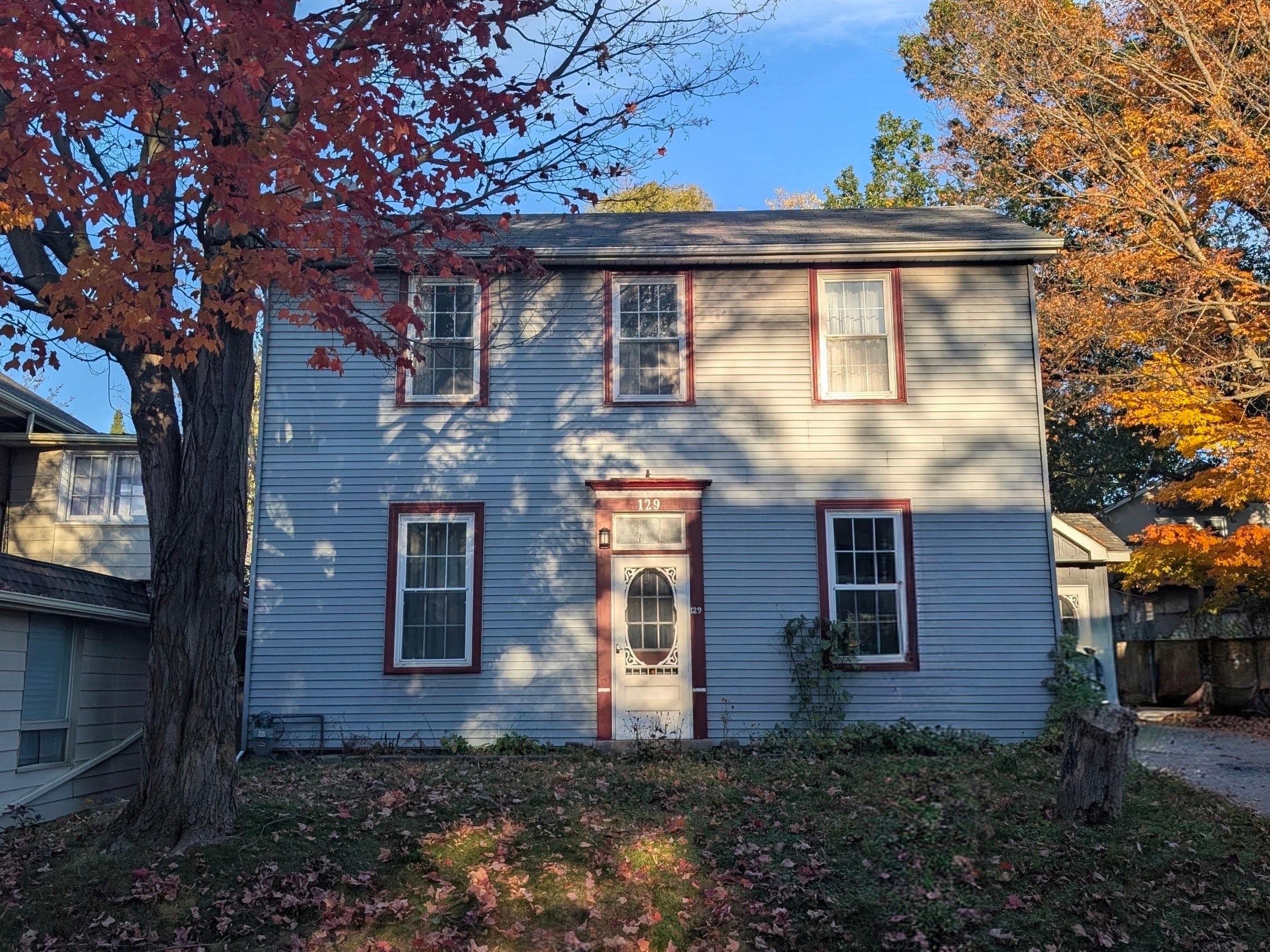
129 Raglan Street.
Date unknownTwo-storey historic house
The Story
A Quiet Corner of Raglan Street
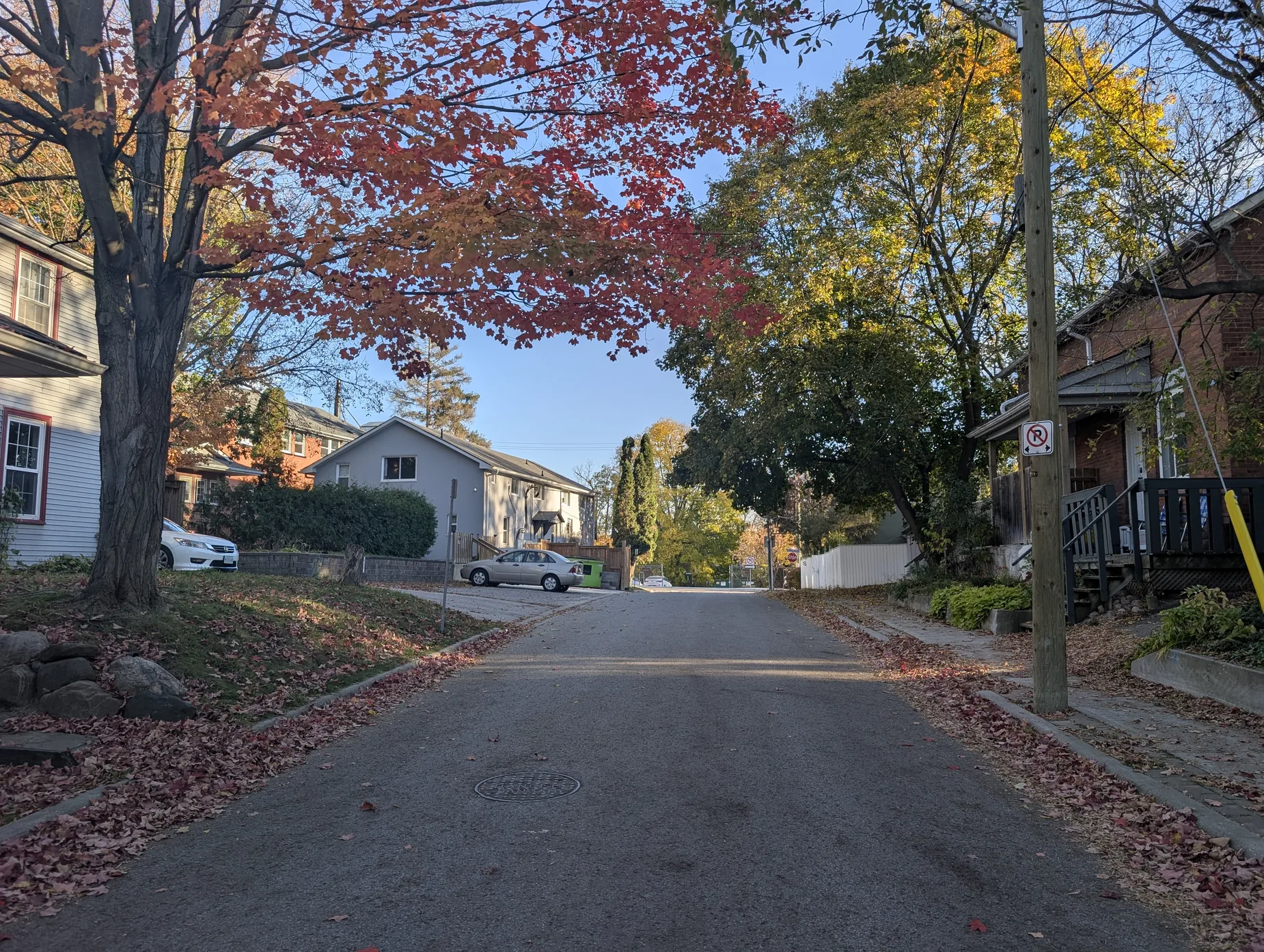
Raglan Street is one of the more hidden corners of downtown Newmarket. Surrounded by one-way streets and dead ends, it sees relatively little traffic. It runs in two short sections: one south from Tecumseth Street to Millard Avenue, and another, after a small jog westward, north to Queen Street.
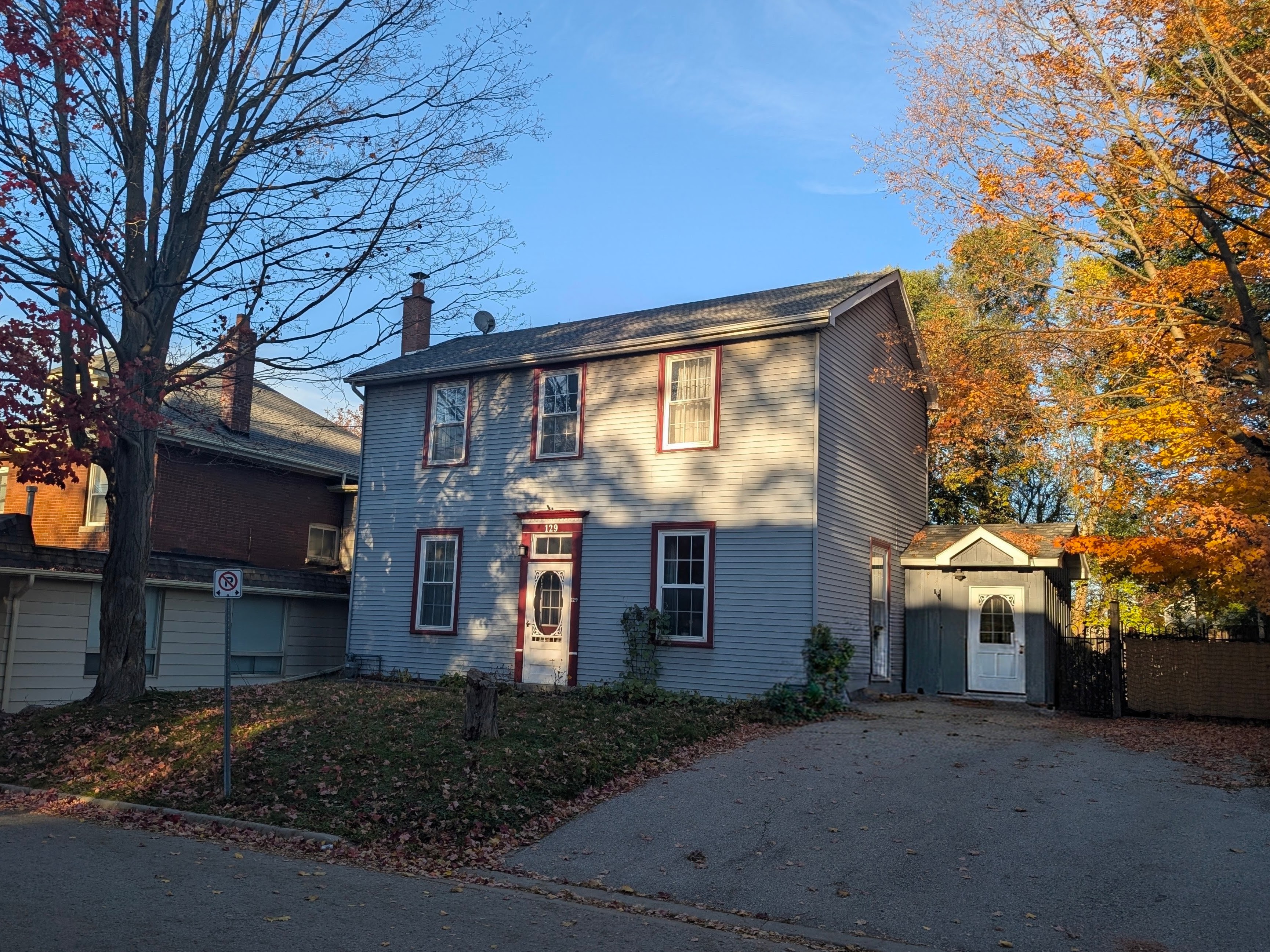
Number 129 stands on the western side of the southern section, one of only two houses on that side of the street. To the north, at the corner of Tecumseth, stands the John H. Brimson House, built in 1906. Brimson operated a substantial carriage-making business in Mechanics' Hall on nearby Lot Street, now Millard Avenue, producing buggies, carriages and other horse-drawn vehicles in the late nineteenth century. The former Mechanics' Hall still stands today, converted into apartments.
At Raglan's southern end stands an even older building. The Newmarket Grammar School opened in 1843 and was the first grammar school established north of Toronto. Among its pupils was William Mulock, who began attending in 1848, at the age of seven. He would go on to become a prominent lawyer, politician and judge, eventually earning a knighthood. The former school building has also survived and has since been converted into apartments.
Did young William Mulock ever pass the spot where 129 Raglan now stands on his way to school? Perhaps, although Raglan itself was not opened as a street until 1879, and we have yet to establish when the house was built.
The street underwent another significant change in the early twentieth century. In 1905, the Metropolitan Electric Railway was rerouted from Main Street through this part of town, with tracks running along Raglan toward Queen Street. Electric railway cars would have been a familiar sight here until service ended in 1930. The railway's former route helps explain Raglan's unusual alignment, particularly where the street approaches Tecumseth.
For all the history surrounding it, the early story of 129 Raglan remains difficult to establish. No historical photograph of the house has yet been located, and its original builder and construction date are unknown. The earliest chapters of its history survive instead in land registry records, which document the changing ownership and boundaries of the property.
Those records, together with census returns and voters' lists, provide the beginnings of a history of the house and the people associated with it.
02The street, its setting and the house
Then & Now
A History on Paper
A History on Paper
No early photograph of 129 Raglan has yet come to light. Its builder and date of construction remain unknown. Instead, its beginnings have to be sought in maps, land records and the occasional name that surfaces in an old directory or voters' list.
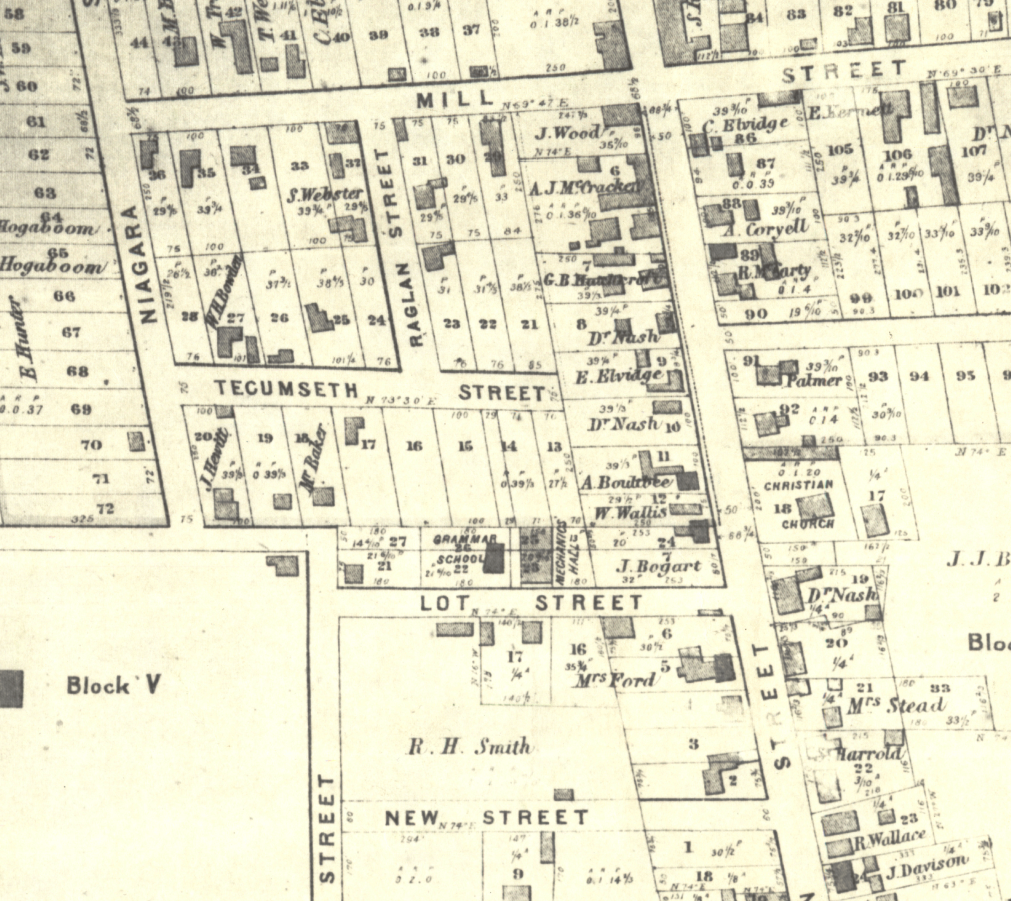
The oldest clues concern the ground beneath the house, rather than the house itself. Land transactions reach back into the nineteenth century, when the neighbourhood was still taking shape. S. W. Hallen's 1862 map shows the area before Raglan was opened as a street in 1879. Neither the map nor the early deeds tell us when No. 129 first appeared.
As Raglan changed, so did the parcels along it. The land abstracts record a succession of transfers, but many concern portions of larger lots. Even a familiar name in a deed cannot safely be treated as the builder or occupant of this particular house. The paper trail is useful, if not always obliging.
By the 1930s the records become more personal. A voters' list from 1934 gives an address, 6 Raglan Street, the old number associated with today's 129. Other households appear in subsequent lists, suggesting an inhabited house with a life of its own, even while its earliest years remain out of reach.
In time, 6 Raglan became 129 Raglan. By the early 1960s, the records place William and Alice at the newer address. Their names offer one more point of connection between the old house and the life of the street.
The documents continue beyond that, of course, but here we can let the trail grow quiet. The records have their dates and signatures. The house, still standing on its secluded stretch of Raglan, keeps the rest.
04Dates of Note
A Historical Timeline
Newmarket Grammar School opens at the south end of what later becomes Raglan Street.
Hallen's village map shows the neighbourhood before Raglan takes its later form.
Raglan opens as a street.
The Metropolitan Electric Railway is rerouted along Raglan.
Electric railway service comes to an end.
A voters' list records a household at 6 Raglan, the former address associated with the house.
William and Alice appear in a voters' list at 129 Raglan.
Fun Fact
A town on wheels.
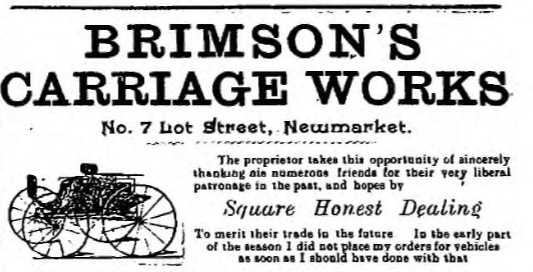
Just around the corner, John H. Brimson made buggies and horse-drawn carriages in Mechanics' Hall on Lot Street, now Millard Avenue. The building survives today, converted into apartments.
It's a small reminder of what moved through these streets before the electric railway arrived. His advertisement offers a glimpse of the businesses, character and everyday bustle of old Newmarket.
Research
Sources & notes
S. W. Hallen, Plan of the Village of Newmarket (1862)
Early village map showing the district before Raglan Street took its later form. It does not establish when the house was built.Richard MacLeod, local-history accounts of Raglan Street and Newmarket Grammar School
Background on the opening of Raglan Street, the Grammar School and William Mulock's attendance.Metropolitan Electric Railway, Newmarket route histories
Context for the railway's route along Raglan and its eventual closure.York Region Land Registry Office 65, historical land abstracts for Plan 47 and Plan 222
Transactions concerning the older parcels. The relationship between individual lot transfers and the present house is not always clear.Census of Canada, 1921 and 1931; Newmarket voters' lists, 1934 onward
These records provide evidence of Raglan households, the older number 6 Raglan, and the later 129 Raglan address.
Questions still open
When was the house built, and by whom? The earliest deeds describe larger parcels, and no period photograph has yet confirmed the building's first appearance. Those are still the questions worth following backwards.
Images. 1862 village map by S. W. Hallen. Contemporary exterior and Raglan Street photographs, October 2026.
Historical record · House 007